Our Mission
The Graveyard of the Atlantic Museum’s mission is to present, preserve, and protect the maritime history and culture of the North Carolina Outer Banks.
Located in Hatteras, the museum is named in honor of the thousands of shipwrecks that rest in the waters off North Carolina’s coast. It is dedicated to sharing our state’s coastal and shipwreck history.
Our History
Located at the southernmost end of Cape Hatteras National Seashore, the Graveyard of the Atlantic Museum is one of seven Regional History Museums under the North Carolina Department of Natural and Cultural Resources. We originally opened to the public as a private museum in October 2002 and joined the North Carolina Department of Cultural Resources (now the North Carolina Department of Natural and Cultural Resources) on June 6, 2008. The museum closed to the public for an extensive renovation of our exhibit gallery in late 2023, reopening to the public again in May 2025. Today, we offer public programming and educational opportunities for visitors of all ages that delve into the history and culture of North Carolina's Outer Banks.
Building Architecture
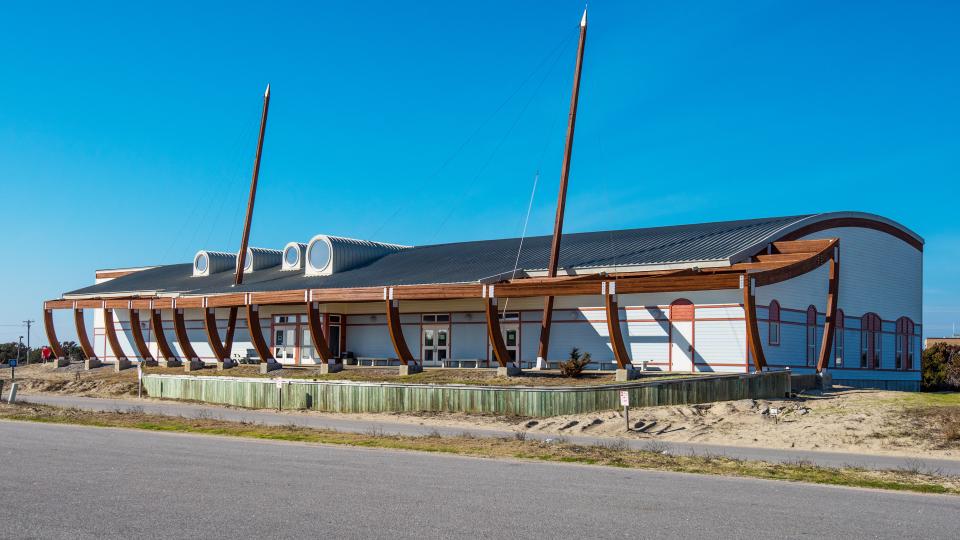
Our building structure itself exceeds current building codes and storm requirements, setting new standards for coastal construction. The 18,769 sq. ft. building is designed to withstand sustained winds of over 135 mph and gusts of over 250 mph and is elevated 12 feet about sea level, surpassing thousand-year flood projections. It is the museum’s intention to minimize or completely eliminate, damage and loss by anticipating and planning for disaster. The overall innovative design uses ship’s curves and time elements to evoke the spirit of historic seafaring vessels. Aesthetically, the museum nestles comfortably into its natural maritime environment, offering its visitors a unique opportunity to learn about the history and culture of North Carolina’s Outer Banks.
North Carolina Department of Natural and Cultural Resources
The N.C. Department of Natural and Cultural Resources (DNCR) manages, promotes, and enhances the things people love about North Carolina—its diverse arts and culture, rich history, libraries, and spectacular natural areas. Through its programs, the Department enriches education, stimulates economic development, improves public health, expands accessibility, and strengthens community resiliency.
DNCR manages more than 100 locations across the state, including historic sites, museums, state parks, trails, aquariums, the N.C. Zoo, the State Library, the State Archives, the N.C. Arts Council, and heritage commissions. These programs and places unite North Carolinians, create a shared identity, and provide common ground.
